
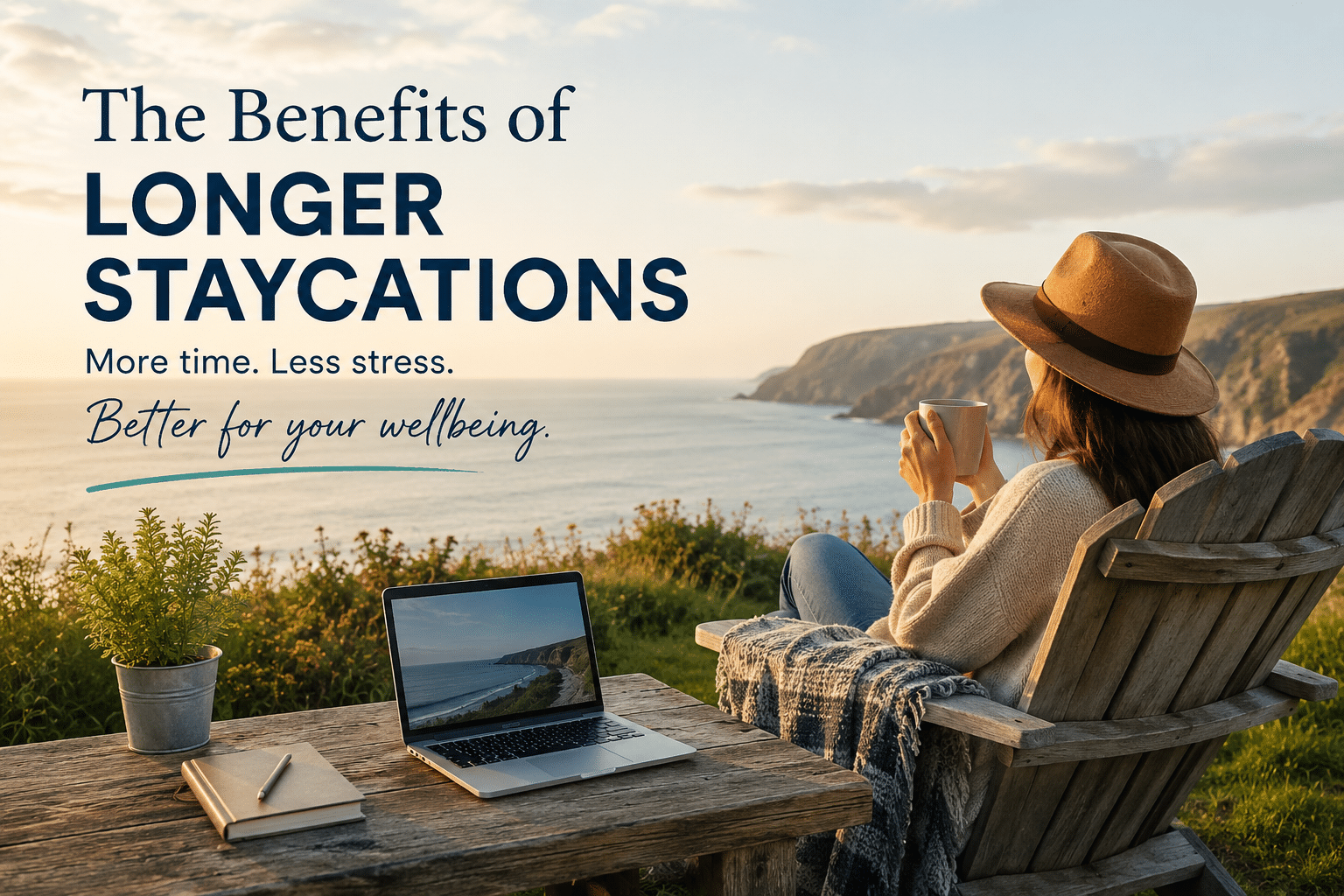
In a world that often feels fast-paced and constantly connected, more people are choosing longer UK staycations over rushed weekend breaks or stressful overseas trips. Rather than squeezing everything into a few days, extended holidays offer the chance to slow down, recharge, and enjoy a deeper connection with your surroundings.
From improved mental wellbeing and lower travel stress to better value for money and more meaningful experiences, longer holidays are becoming an increasingly popular way to travel. Longer stays can leave you feeling genuinely refreshed rather than exhausted.
Unlike short breaks packed with busy itineraries and constant time pressure, longer staycations encourage a more relaxed and restorative pace.
Instead of trying to fit everything into one weekend, travellers can enjoy unstructured time, explore local areas at leisure, and embrace a slower style of travel. This creates space for proper rest, spontaneity, and a stronger sense of presence — something many people feel is missing from everyday life.
Longer UK holidays also avoid many of the common frustrations of international travel, including flight delays, airport queues, baggage restrictions, and rising travel costs. Staying closer to home can often feel simpler, calmer, and more enjoyable.
One of the biggest benefits of a longer holiday is the opportunity to truly disconnect from everyday stress and mentally recharge.
Many people find the first few days away are spent mentally catching up — thinking about work, routines, notifications, and unfinished tasks. Travel psychologists often describe this as a transition period, where the brain gradually adapts to a slower pace.
Research consistently suggests that short breaks may provide temporary relief, but longer holidays often deliver deeper and longer-lasting wellbeing benefits. Many travellers only begin to feel fully relaxed after several days away, which is why breaks lasting around 7–10 days are often considered ideal for rest and recovery.
What this often looks like in practice:
Longer breaks may contribute to:
Rather than spending your entire trip trying to relax, you actually get time to enjoy being relaxed.
The benefits of longer holidays are not just mental — they can also support physical wellbeing.
With more time available, many people naturally become more active without even trying. Longer staycations often include walking, coastal routes, countryside exploration, swimming, or simply spending more time outdoors.
Extended breaks can also help restore healthier habits by allowing more consistent sleep routines, reduced stress, and less screen time.
Potential physical benefits include:
For many travellers, longer holidays feel restorative because they allow the body time to recover as well as the mind.
A major reason people are choosing UK staycations is convenience.
Travelling within the UK removes many of the pressures linked to overseas holidays, making the overall experience feel far more relaxing from the start.
Benefits may include:
Instead of arriving feeling drained from travel, you can often settle into your destination quickly and start enjoying your holiday immediately.
Longer stays can often provide surprisingly good value.
Many accommodation providers offer discounted rates for weekly or extended bookings, lowering the average nightly cost. Self-catering options can also reduce spending on meals, while avoiding flights and airport expenses often makes UK travel more affordable overall.
Potential savings include:
For couples, families, and groups, staying longer may be one of the most cost-effective ways to enjoy a meaningful break.
One of the biggest advantages of staying longer is the ability to experience destinations more authentically.
Instead of rushing between attractions, longer holidays allow travellers to discover places gradually, revisit favourite spots, and enjoy quieter moments that shorter trips often miss.
A longer stay gives you time to:
This slower approach to travel often creates richer memories and a more enjoyable overall experience.
Choosing a UK staycation can also reduce the environmental impact of travel.
By avoiding flights and spending more time in one location, travellers can reduce transport-related emissions while embracing a more sustainable style of tourism.
Longer stays may also support responsible travel habits by encouraging visitors to spend more time supporting local communities rather than moving quickly between destinations.
For travellers interested in more environmentally conscious holidays, extended UK breaks can be a practical and rewarding choice.
For pet owners, longer UK holidays can make travel much simpler and more enjoyable.
Instead of arranging expensive boarding or leaving pets behind, many travellers choose pet-friendly accommodation so the whole household can travel together.
Benefits include:
The rise of hybrid and remote work has made longer breaks more accessible than ever.
Many people now combine work and leisure through “workcations,” extending their stay while working remotely for part of the trip.
A longer stay allows more flexibility to:
For remote workers, an extended staycation can provide a refreshing change of scenery while maintaining routines and responsibilities.
Longer staycations also benefit local economies, particularly in rural and coastal areas.
Visitors staying for extended periods are more likely to support:
This spending helps support local employment and encourages sustainable, year-round tourism across the UK.
Many travellers find that holidays lasting around one week or longer provide enough time to genuinely unwind.
A 7–10 day stay often allows time to:
The difference is simple: rather than spending your entire break trying to relax, you spend more time actually benefiting from relaxation.
For many people, yes. Longer holidays often provide more time to mentally switch off, reduce stress, improve sleep, and recover from work-related pressure.
Many travellers report feeling noticeably more relaxed after several days away, which is one reason holidays lasting around 7–10 days are often recommended.
They can be. Weekly accommodation discounts, reduced transport costs, self-catering, and fewer travel expenses can make longer stays surprisingly cost-effective.
In many cases, yes. Avoiding flights and spending longer in one destination can reduce travel-related emissions and support more sustainable tourism.
Longer staycations are about more than simply taking extra time off — they offer an opportunity to rest more deeply, travel more meaningfully, and return home feeling genuinely restored.
From better mental and physical wellbeing to lower travel stress, improved value, and deeper local experiences, staying longer can transform the way you experience a holiday.
If you usually opt for quick weekend breaks, extending your next UK getaway to a week or more may be the difference between feeling temporarily distracted and truly recharged.